

By Dr. Leons Mathew Abraham,
Project Officer, Threatened Species Recovery Programme, Aaranyak
The story of migration began long before human civilisation – carved into the memory of Earth itself during the Great Ice Age, when advancing glaciers forced birds into an eternal journey of survival. Over millennia, this instinct evolved into one of nature’s most extraordinary spectacles: the seasonal migration of birds across continents, oceans and mountain ranges.
Each year, on World Migratory Bird Day on May 9, the world celebrates these remarkable avian travellers whose journeys connect ecosystems across the planet. What once puzzled philosophers and naturalists is now recognised as a powerful reminder of Earth’s ecological interconnectedness. One of the most dramatic revelations came in 1822, when a White Stork landed in Germany carrying an African spear through its neck – the famous pfeilstorch or “arrow stork.” That single bird became living proof that migration spanned continents and reshaped humanity’s understanding of the natural world.

Today, Northeast India stands at the heart of this global phenomenon.
Positioned where the Central Asian and East Asian-Australasian Flyways converge, the region forms one of the world’s most vital migratory gateways. From the Himalayan highlands to the floodplains of the Brahmaputra, its wetlands, forests and grasslands sustain thousands of migratory birds undertaking epic journeys across Asia.
Among them is the critically important White-throated Bushchat – one of the rarest songbirds on Earth – which migrates from Mongolia to winter in the fragile grasslands of Kaziranga National Park and Manas National Park. The once-vastly persecuted Yellow-breasted Bunting descends from its northern breeding grounds into the grasslands of Northeast India, where it utilises rice fields as important foraging habitats during the winter months.
The Northeast also hosts some of the planet’s greatest endurance fliers.
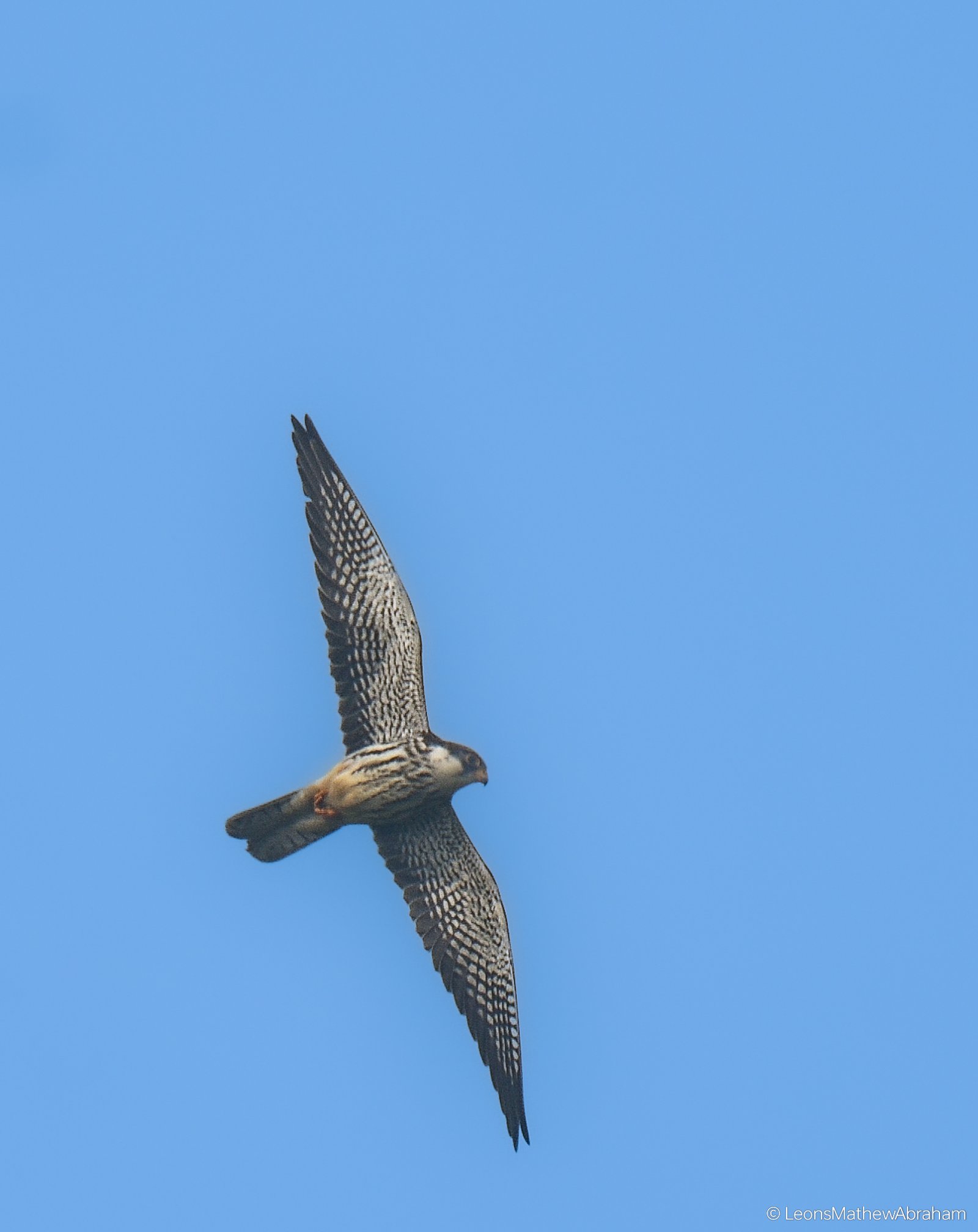
Every autumn, millions of Amur Falcons arrive in Nagaland after crossing vast stretches of Asia, pausing briefly before beginning an astonishing non-stop flight across the Indian Ocean towards southern Africa. Equally awe-inspiring is the Bar-headed Goose, famed for flying over the Himalayas at altitudes where oxygen levels are dangerously low. Meanwhile, the Northern Pintail travels over 5,000 kilometres from Siberia to Assam’s wetlands and the various subspecies of the tiny Siberian Stonechat journeys from the Russian taiga, China and the himalayas to the riverine grasslands of Northeast India.

Yet these ancient flyways now face unprecedented threats.
Wetlands are shrinking, grasslands are disappearing and climate change is altering the delicate seasonal rhythms upon which migration depends. The destruction of habitats along migratory routes is not merely a local conservation issue – it dismantles the ecological infrastructure connecting continents.
Protecting Northeast India’s landscapes therefore means safeguarding a living bridge between the Arctic tundra, Central Asian steppes and the Indian subcontinent. The future of migration may ultimately depend on whether these fragile corridors continue to survive in a rapidly changing world.
As the skies fill once more with wings this World Migratory Bird Day, the message is unmistakable: conserving migratory birds is not only about protecting wildlife – it is about preserving one of Earth’s oldest and most extraordinary stories of resilience, endurance and interconnectedness.