
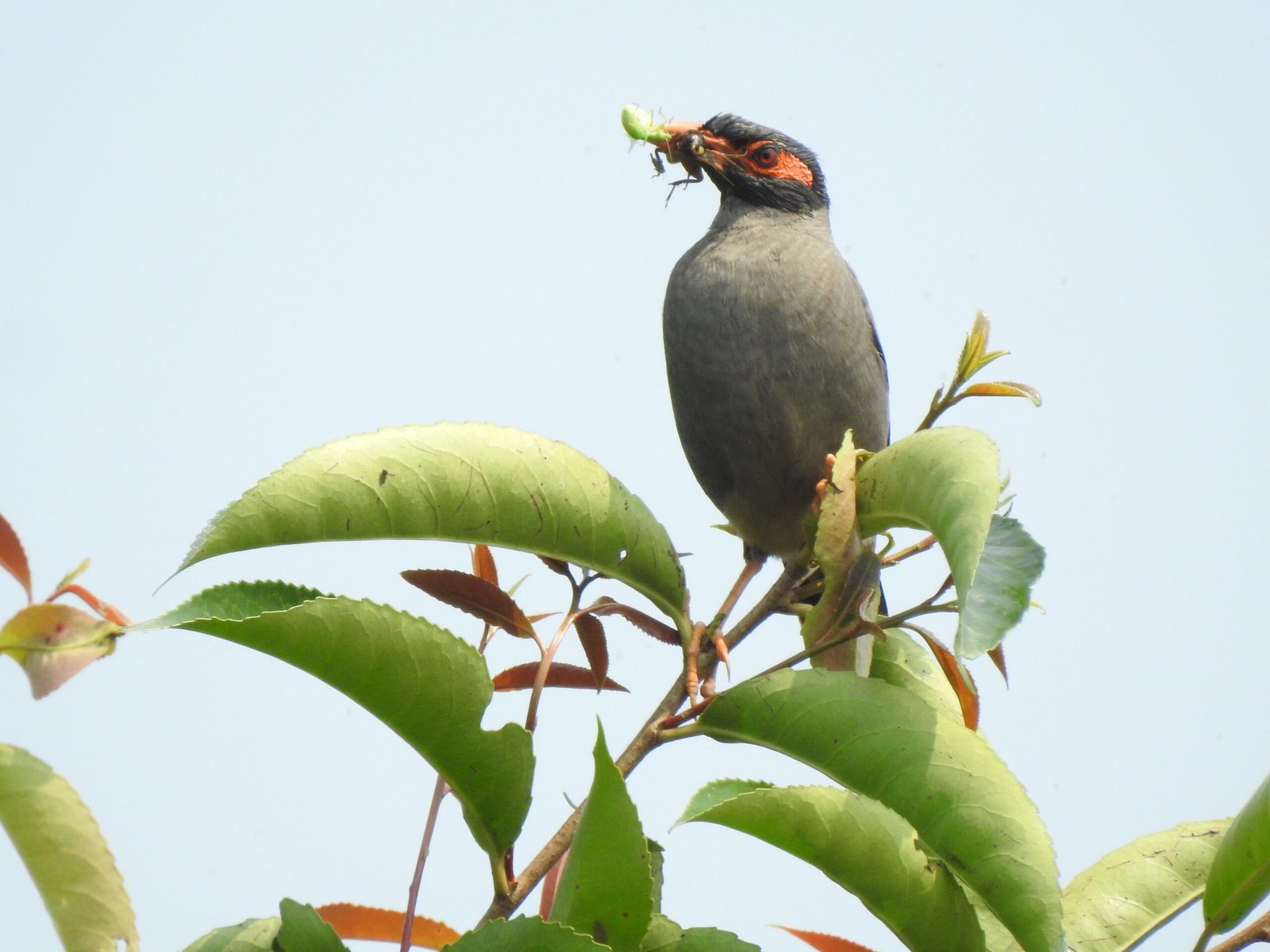

By Anushka Saikia
One of my earliest childhood memories is of sitting beside my mother during evening prayers. At an age when words still stumbled out imperfectly, I remember interrupting a hymn to ask, “Who is Garuda?” My mother explained that Garuda was the vehicle of Vishnu, revered in Hinduism, Buddhism, and Jainism. Sensing that mythology alone might not satisfy a curious child, she added, “Garuda is also considered the king of birds.”
Years later, I find myself returning to that conversation. Not because of Garuda alone, but because it revealed something fundamental: birds have always occupied a special place in the human imagination. They are not merely creatures that share our landscapes. They inhabit our stories, beliefs, songs, metaphors, and memories. Through them, nature quietly enters culture.
The relationship between people and birds is perhaps one of the oldest and most intimate forms of coexistence. Their songs announce the changing seasons; their migrations signal shifts in weather; their presence shapes folklore and tradition. Long before ecological science gave us the vocabulary to describe environmental relationships, communities understood their surroundings through such observations. In many ways, culture itself became a repository of ecological knowledge.
Assamese society offers numerous examples of this connection. The arrival of Bohag was once anticipated not through calendars but through the calls of the cuckoo and the Asian koel, the f lowering of trees, and the subtle transformations of the landscape.
চ’তে গৈয়ে গৈয়ে বহাগ পালেহি;
ফুলিলে ভেবেলি লতা…
Bihu songs are filled with references to birds, parrots, mynas, egrets, ducks, and countless others. These birds appear not as decorative symbols but as participants in everyday life, woven into expressions of love, longing, celebration, and separation.
An old Assamese wedding song:
বাৰিৰ চুকৰ ডালিমজোপা
ভাতৌ পৰি খায়,
দেউতাই পোহা মইনা চৰাই
উৰি গুচি যায়।
Here, a daughter leaving her parental home is compared to a pet myna bird flying away. The imagery works because the bird was familiar, present, and emotionally meaningful. Such songs preserved not only cultural values but also a record of the biodiversity that surrounded the people who composed them.
This raises an important question: what happens when the birds, the forests disappear?
When we speak about conservation, discussions often revolve around species counts, protected areas, and extinction risks. These are undeniably important. Yet conservation is also about preserving relationships between people and landscapes, memory and place, culture and ecology.
Many of the birds that once shaped the cultural imagination of Assam now face uncertain futures. The White-winged Wood Duck, Assam’s state bird, survives only in a few fragmented habitats. Vultures, hornbills, wetland birds, and many other species have experienced severe declines. Habitat loss, urban expansion, industrial development, and changing land-use patterns have transformed ecosystems across the region. The ecological consequences of these changes are widely acknowledged. The cultural consequences are discussed far less.
When a bird disappears from a landscape, something more than biodiversity is lost. A song loses part of its meaning. A metaphor becomes detached from lived experience. A child growing up in a city may learn about a bird from a textbook but never hear its call. Gradually, the cultural memory associated with that species begins to fade. This is perhaps one of the less visible dimensions of environmental change.
Ecosystems do not disappear overnight; they unravel slowly. Culture often follows a similar path. Traditions may survive for some time after the environmental conditions that gave rise to them have vanished. Eventually, however, they become disconnected from their roots. The modern celebration of Bihu illustrates this tension. While Bihu continues to thrive as a marker of Assamese identity, the ecological rhythms that once shaped it are increasingly distant from everyday life.
The festival remains, but the intimate relationship with seasons, landscapes, and biodiversity that nurtured it is becoming less visible. None of this suggests that culture is static or that traditions should remain unchanged. Cultures naturally evolve. Yet meaningful cultural preservation requires more than safeguarding language, songs, and rituals in isolation. It also requires protecting the environments that sustain them. Nature is not merely a backdrop to human society. It is one of the foundations upon which society is built.
The forests, wetlands, rivers, and grasslands of Assam have influenced its folklore, literature, music, and collective identity for centuries. To conserve these landscapes is therefore not only an ecological responsibility but also a cultural one. As conversations about preserving Assamese language and culture continue to grow, it may be worthwhile to ask a broader question: Can a culture truly be conserved if the landscapes that shaped it are allowed to disappear?
The answer is not simple. But it is a question worth reflecting upon, for the fate of nature and the fate of culture may be far more intertwined than we often imagine.