
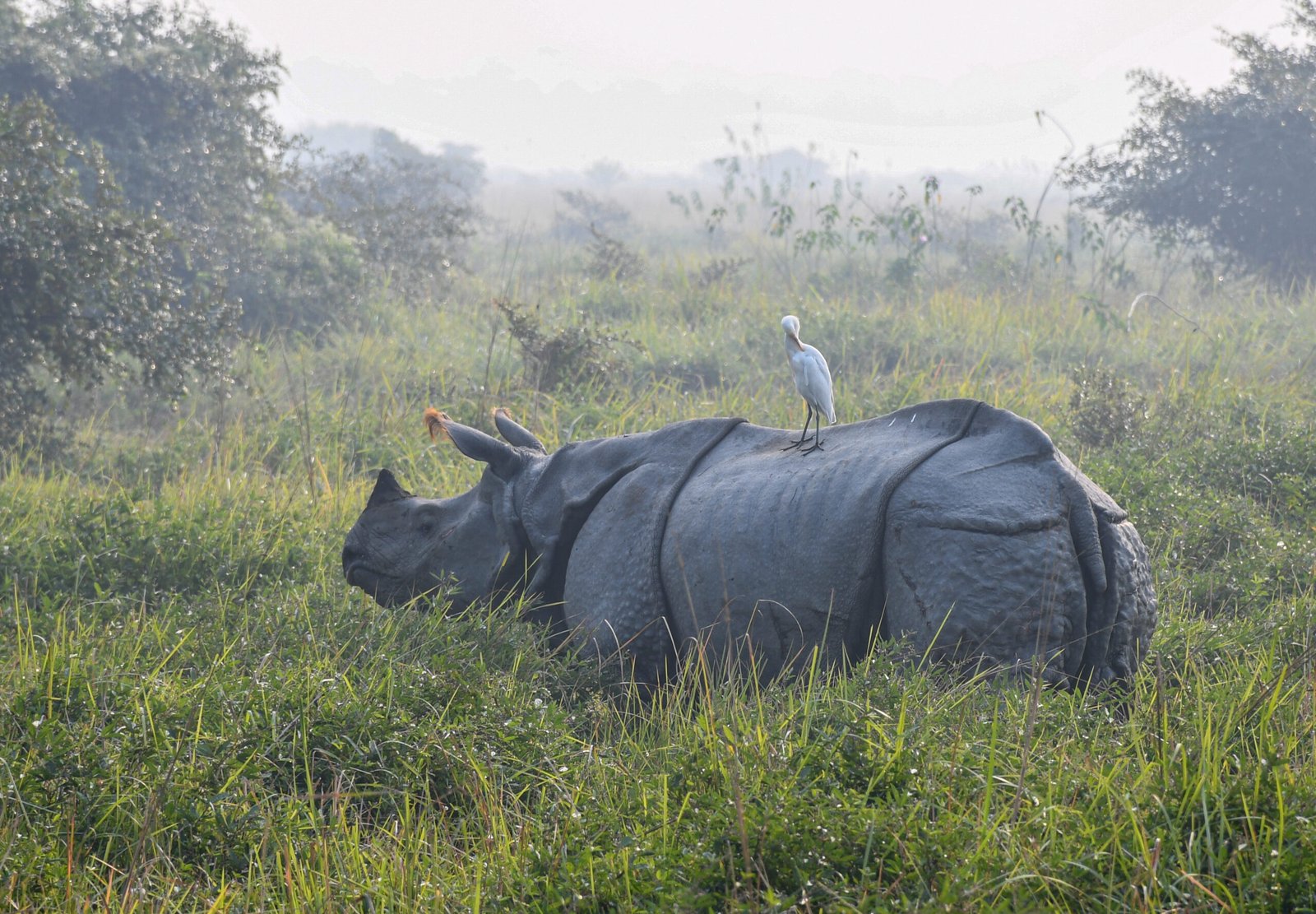

Draw Kaziranga’s Eco-Sensitive Zone based on ecology, law and people’s needs
The move towards notifying the long-pending Eco-Sensitive Zone (ESZ) around Kaziranga National Park and Tiger Reserve should be appropriate, scientifically determined and legally compliant.
The purpose of such a zone should be clear: to safeguard the ecological integrity and long-term security of Kaziranga while enabling communities living around the landscape to pursue dignified livelihoods and environmentally compatible development.
For Kaziranga, the question should therefore not be reduced to choosing one uniform distance around the park for the ESZ. The appropriate extent of the ESZ must emerge from the ecology and geography of the landscape, the applicable legal framework, existing patterns of human use, and meaningful consultation with the people who live and depend on this landscape.
Aaranyak believes that a credible ESZ for Kaziranga National Park should be based on four principal principles:
• Ecological security
• Livelihood security
• Sustainable development
• Human well-being and coexistence
1.What an ESZ is intended to achieve
An ESZ is not intended to function simply as an extension of a National Park in which every human activity is prohibited.
The Ministry of Environment, Forest and Climate Change’s 2011 Guidelines describe Eco-Sensitive Zones as transition areas or “shock absorbers” around Protected Areas, with regulation rather than blanket prohibition as the general approach. The same Guidelines make clear that their extent should be :
• Protected Area-specific and flexible, and that even around an individual Protected Area the width and degree of regulation need not be uniform.
• Ecologically important corridors and landscape linkages may also require protection even where they extend farther from a Protected Area.
Kaziranga is particularly suited to such a landscape-specific approach.
Its surroundings are not ecologically symmetrical. The Brahmaputra River and its dynamic riverine landscape lie to the north; hills, catchments and crucial wildlife movement routes occur towards the south; while villages, agricultural land, tea-growing areas, tourism facilities, transport infrastructure and other forms of land use occur in different combinations around the landscape.
A single radial distance applied identically in every direction cannot adequately represent these ecological and social differences.
2. The legal framework must guide the final boundary
The delineation and notification of the Eco-Sensitive Zone must strictly follow the Environment (Protection) Act, 1986, the Environment (Protection) Rules, 1986, applicable Ministry guidelines and the directions of the Hon’ble Supreme Court of India.
The legal position has also evolved and must be considered in its entirety.
Most importantly for Kaziranga as a Tiger Reserve, the Hon’ble Supreme Court in its judgment of 17 November 2025 approved the principle that the Eco-Sensitive Zone for a Tiger Reserve must, at a minimum, include its buffer and fringe areas. The Court also approved the requirement for a minimum one-kilometre cushion from critical tiger habitat where the buffer is absent or discontinuous, together with other applicable safeguards.
The Kaziranga ESZ exercise should not begin with a predetermined number and attempt to fit the landscape within it.
The boundary should instead be derived from the legal requirements applicable to Kaziranga National Park and Tiger Reserve and from a scientifically documented assessment of the landscape.
3. A variable-width ESZ for Kaziranga
Aaranyak therefore supports a variable-width Eco-Sensitive Zone, whose extent changes according to ecological sensitivity, wildlife requirements, hydrology, land use and settlement patterns.
Areas performing critical ecological and wildlife functionaries may require a wider zone and stronger safeguards. Areas containing long-established settlements and built-up or intensively used landscapes may warrant a different regulatory approach, consistent with applicable law.
4. People-centred conservation
Communities living around Kaziranga have been part of the social and ecological history of this landscape for generations and remain central to its future.
Aaranyak firmly believes that conservation cannot succeed without people’s participation and support.
Declaration of an Eco-Sensitive Zone should therefore not result in unnecessary disruption of legitimate livelihoods, traditional agriculture, existing settlements, household activities or ordinary community life.
The regulatory focus should fall principally on new or expanding activities capable of causing significant ecological damage, while environmentally compatible livelihoods and sustainable development should be enabled and encouraged.
The Eco-Sensitive Zone process should therefore be accompanied by a comprehensive socio-economic assessment capable of identifying:
• livelihood dependence and vulnerability;
• agricultural and land-use patterns;
• existing settlements and civic requirements;
• tourism-related livelihoods;
• access to public services and infrastructure;
• human-wildlife conflict and coexistence needs;
• development aspirations of local communities; and
• opportunities for green and climate-resilient livelihoods.
The people concerned must have a genuine opportunity to understand the proposal, participate in its formulation and raise concerns before decisions are finalised.
5. Ecological minimums that the Kaziranga ESZ should secure:
• Wildlife corridors and landscape connectivity
The nine animal corridors officially recognised between Kaziranga and the adjoining southern hill landscape perform a critical connectivity function and should be protected in their entirety and managed so that wildlife movement is not progressively constricted by incompatible land-use change. The Government of Assam itself has notified these nine corridors connecting the Karbi Anglong Hills and Kaziranga National Park.
• Flood refuges and routes to high ground
Kaziranga is a floodplain ecosystem. During high floods, animals require safe access to higher ground outside low-lying portions of the park.
The Eco-Sensitive Zone and associated land-use planning should therefore identify and protect not only important flood refuges but also the routes through which wildlife reaches those refuges.
• Rivers, wetlands, streams and hydrological connectivity
Kaziranga cannot be managed independently of the hydrological systems that sustain it.
Perennial and seasonal streams, wetlands, beels, drainage pathways, river channels, floodplain systems and ecologically significant catchments influencing the Kaziranga landscape should be mapped and incorporated into decision-making.
Development should maintain natural drainage and avoid fragmentation or degradation of existing important water pathways.
Northern riverine landscape
The Brahmaputra-facing chars, chaporis and other riverine habitats should be explicitly considered rather than treating the northern boundary simply as a demarcating line on a map.
The river is dynamic, and the ecological relationship between Kaziranga and its riverine landscape changes over time. Planning should therefore accommodate the shifting nature of river channels, sedimentation, erosion, seasonal habitat uses and wildlife movement.
Tiger Reserve buffer and fringe areas
The Eco-Sensitive Zone must comply with the legal requirements applicable to Tiger Reserves, including the Supreme Court’s 2025 directions concerning buffer and fringe areas. These areas should therefore form a legal and ecological baseline for the exercise rather than being assessed solely through a fixed radial-distance approach.
Projects and land-use changes should not be assessed only in isolation.
Multiple individually permissible developments may together affect wildlife movement, water availability, drainage, noise, traffic, waste generation or habitat continuity.
6. Community Livelihood and Development Plan
The Eco-Sensitive Zone notification should not stand alone. Aaranyak believes that it be accompanied by a Community Livelihood and Sustainable Development Plan prepared in consultation with local communities and relevant institutions.
The Plan should support, where locally appropriate:
• sustainable and climate-resilient agriculture;
• nature-based livelihoods and local enterprises;
• responsible and community-benefiting tourism;
• community-managed tourism and homestays;
• skill development and youth employment;
• sustainable livestock and agricultural practices;
• human-wildlife conflict mitigation and rapid response;
• livelihood support in areas experiencing recurrent wildlife movement;
• improved waste, sanitation and water-management systems;
• environmentally compatible roads and civic infrastructure;
• preservation and restoration of wetlands, streams and degraded ecological areas
- Prevent degradation of ecological areas
- incentives for communities and landholders who contribute to maintaining wildlife connectivity and ecosystem services.
7. Transparent and participatory decision-making
Public participation should occur before the proposal is finalised rather than after key decisions have effectively been made.
Aaranyak suggests that the Government make publicly available:
• the proposed Eco-Sensitive Zone boundary;
• village-wise and cadastral maps at an appropriate scale;
• the scientific basis and criteria used to determine different sections of the boundary;
• the proposed list of prohibited, regulated and permissible activities;
• the location of recognised wildlife corridors and other important ecological features;
• the socio-economic assessment underlying the proposal; and
• the proposed framework for the Zonal Master Plan.
Information should be communicated in accessible language and made available at the village and local-government level, with appropriate translations including Assamese and other locally relevant languages such as Karbi, Bodo, Hindi and Nepali according to the communities concerned.
Consultations should include affected Gram Panchayats and villages, urban and local authorities, tea-growing and agricultural stakeholders, tourism operators, researchers, conservation organisations and other relevant institutions.
Given the ecological relationship between Kaziranga and the southern hill landscape, the Karbi Anglong Autonomous Council and relevant departments and community institutions should be meaningfully consulted in matters affecting areas under their jurisdiction or ecological influence.
Claims, objections and alternative proposals received through consultation should be documented and transparently considered.
8. Aaranyak’s offer of scientific and technical support
Aaranyak is willing to share its relevant ecological information, field knowledge, scientific expertise and technical capacity at the disposal of the Government of Assam without cost, subject to appropriate institutional arrangements.
Such support could include assistance with ecological and spatial analysis, wildlife connectivity, wetland and hydrological information, landscape assessment, community consultation, conservation planning and interpretation of scientific information for decision-making.
The objective should not be to advocate the widest or narrowest possible Eco-Sensitive Zone. The objective should be to help identify the right Eco-Sensitive Zone for Kaziranga.
Aaranyak notes that Kaziranga, inscribed as a World Heritage property in 1985, has no formal buffer zone recorded under that Convention, and that whatever zone is notified is likely to be examined closely at the national and international level.
Decisions should not be taken in a hurry. Assam Government may constitute an expert group to carry out the study on the ecological security of the KNP and adjoining landscape, socioeconomic and livelihood security of the people in the surrounding and future sustainability of human-nature coexistence.
The expert group should incorporate subject specialists on wildlife, landscape ecology, animal behaviour, disaster management, climate change, administrative and governance matters, as well as representative of local communities.
Download the PDF (English version)
Download the PDF (Assamese version)
Download the PDF (Karbi version)